

Founding and History of Toyo Denki
About Us
Founding of Toyo Denki
Historical Context
Japan's first railway line opened in 1872. Imported from Britain, the steam locomotive that ran between Tokyo (Shimbashi) and Yokohama (Sakuragicho) amazed the public and marked a historical milestone.On the other hand, it's no exaggeration to say that not many know when electric trains first appeared in Japan.
That was in 1895, when Kyoto Electric Railway began operating a tram line between Kyoto Station and Fushimi, marking the beginning of the modernization of urban transportation in Japan.
Since then, Japan's railway technology has advanced remarkably, and the domestic production of train bodies and rails has progressed rapidly.Nevertheless, Japan continued to depend on imported foreign products for essential electrical equipment, including traction motors and controllers, which are core components of electric trains.
The Shift Toward Domestic Production
Amid these circumstances, World War I broke out in 1914.Amid the wartime economic boom, Japan's electric railways began to flourish, but imports of essential electrical equipment were completely cut off.As a result, a movement took hold across the railway, business, and industrial sectors to produce railway electrical equipment domestically rather than depend on foreign imports.
Our Founding
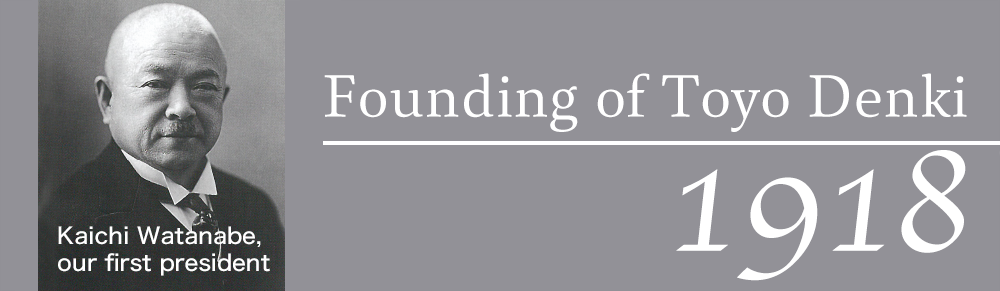
Serving as president of a company then known as Ishikawajima Shipyard while also holding executive positions at Keihan Electric Railway and other firms, Kaichi Watanabe (the founder of the Company) was long recognized as a pioneer in the Japanese electric railway industry. In 1917, under Watanabe's leadership, a technical partnership was concluded with Dick Kerr of the United Kingdom (Dick, Kerr & Co. Ltd., later English Electric Co.), a globally renowned manufacturer of electrical equipment. Thereafter, on June 20, 1918, Toyo Denki Seizo K.K. was founded with capital of three million yen to localize production of Dick Kerr's products.
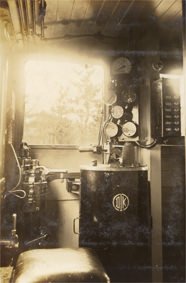
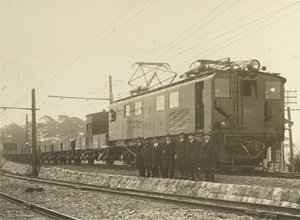
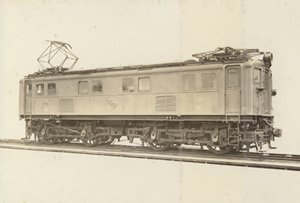
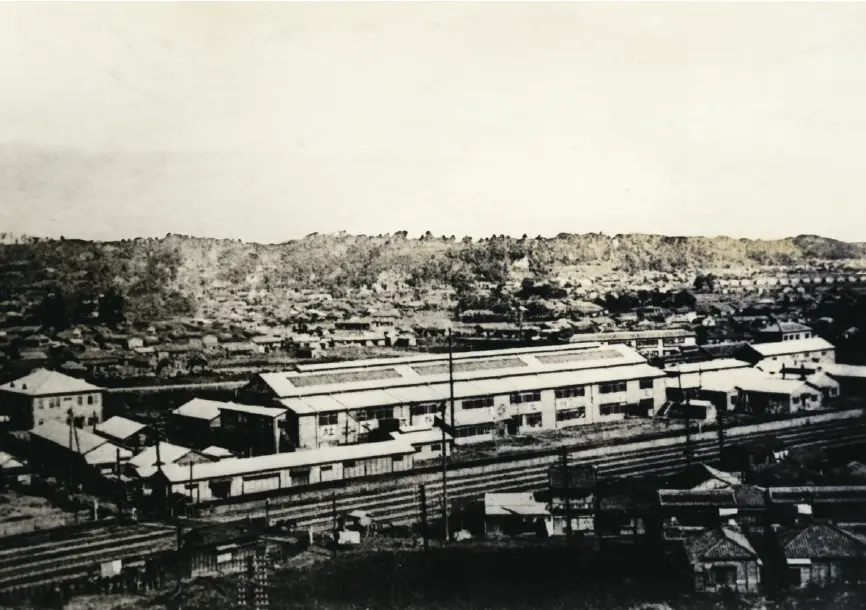
The following year, we constructed the Yokohama Factory in Nishikubo-cho, Hodogaya-ku, taking advantage of the favorable location west of Yokohama Port, which was Japan's most prosperous trading port at the time.Operations commenced as soon as the factory was built, and by 1920, we had completed our first direct controller and traction motor, which we delivered to Keihan Electric Railway.
Thanks to the strong reputation of this product, we were given the opportunity to begin delivering products to major railway companies across Japan, thereby establishing our position as a specialized manufacturer.
Origin of Our Name
After the outbreak of World War I in 1914, the suspension of electrical equipment imports from Europe fueled a rapid shift toward domestic production.
According to our founding prospectus, the Company was established to address the domestic shortage caused by the suspension of imports during World War I by promoting domestic production, to block the outflow of capital by preventing foreign imports, and to export domestically produced goods to countries across Asia and earn foreign currency, thereby aiding the development of the nation.
The name Toyo Denki Seizo (meaning "Eastern Electrical Appliance Manufacturing") was chosen to embody the founders' ambitious vision to not only produce electrical equipment for railway vehicles domestically, but also contribute to the nation's development by exporting these products extensively across Asia.
History
1918 - 1949 (Founding to Post-War Period)
1918
-
- Founded with capital of 3 million yen through a technical partnership with the U.K. company Dick Kerr
1919
-
- Yokohama Factory begins operations
1920
-
- Delivered direct controllers and traction motors to Keihan Electric Railway Co., Ltd.
1921
-
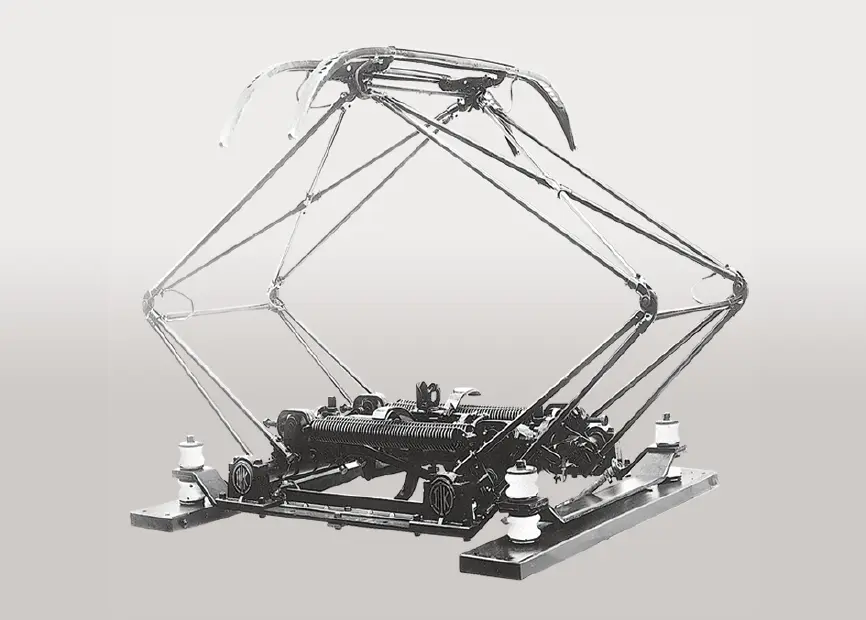
- Completed the nation's first domestic pantographFirst in Japan
1926
-
- Started production of three-phase AC commutator motors (Schrage motors, later AS motors)
1932
-
- Completed the nation's first electrical components for trolleybusesFirst in Japan
- Completed the nation's first controller with regenerative braking using compound-wound motorsFirst in Japan
1935
-
- Completed the nation's first diesel electric vehicle and delivered it to Sagami Railway Co., Ltd. First in Japan
- Established Toyo Denki Youth School (predecessor institution to the present-day Technical Training Center)
1949
-
- Shares listed on the Tokyo Stock Exchange, First Section
1950 - 1989 (Post-War Reconstruction to Economic Boom)
1950
-
- Developed the ST-type shunt-wound commutator motor (200 hp)
1952
-
- Completed the nation's first hollow-axle parallel Cardan drive systemFirst in Japan
1954
-
- Established a technical research institute
1958
-
- Completed the traction motor and controller for the Japanese National Railways' limited express train Kodama
1959
-
- Completed an automatic train stop (ATS) system
1960
-
- Trial production of traction motors and driving gear units for Shinkansen
- Received an order for an electric towing locomotive for the Panama Canal
- Completed the nation's first constant-speed operation controller for railway vehiclesFirst in Japan
- Completed the nation's first hydraulic winch for shipsFirst in Japan
1963
-
- Delivered electrical equipment for Shinkansen trains, including pantographs, traction motors, and drive gear units, to Japanese National Railways
- Completed the nation's first thyristor static Leonard equipment for newspaper rotary pressesFirst in Japan
1964
-
- Opened a technical training school
1965
-
- Completed the nation's first thyristor static Leonard equipment series First in Japan
1966
-
- Launched ticket vending machines
1968
-
- Completed the world's first mass-produced static auxiliary power supply (SIV) for railway vehiclesFirst in the World
1969
-
- Completed testing equipment for automobile brakes
1972
-
- Completed the world's first fully brushless motor generator (BLMG)First in the World
- Completed the nation's first 150 kVA 440 Hz static CVCFFirst in Japan
1973
-
- Completed a commuter pass issuing system
1977
-
- Completed a large automatic drafting machine
1978
-
- Developed the Company's proprietary AFE chopper system
1983
-
- Completed the Drastem 8000, an electrostatic printer plotter
- Completed an onboard supplementary ticket issuing machine
1985
-
- Delivered superimposed excitation field control systems for Japanese National Railways' 205 series trains
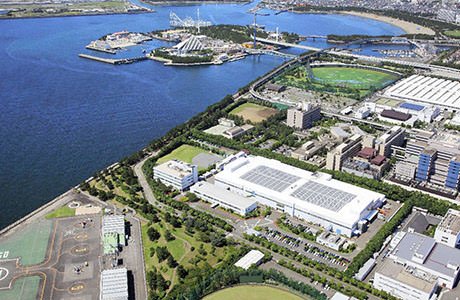
- Completed construction of the current Yokohama Plant
- Practical application of VVVF inverter controllers for railway vehicle propulsion
1988
-
- Completed the world's first heat pipe-cooled VVVF inverter capable of simultaneous control of eight motors and delivered it to Tokyu CorporationFirst in the World
1989
-
- Completed the nation's first compact VVVF inverter using reverse-conducting GTO thyristorsFirst in Japan
1990 - 2023 (Global Expansion to a Century of History and Beyond)
1990
-
- Completed the nation's first stroke-switching door operating mechanismFirst in Japan
- Completed the nation's first intelligent door drive systemFirst in Japan
1991
-
- Completed the nation's first lightweight VVVF inverter using mass-produced 1,500 V reverse-conducting GTO thyristorsFirst in Japan
1992
-
- Completed an LED plain paper plotter
1994
-
- Acquired ISO 9002 certification for the manufacture of general-purpose inverters
- Acquired ISO 9001 certification at Sagami Plant
1996
-
- Delivered single-arm pantographs
1997
-
- Completed an onboard supplementary ticket issuing machine compatible with automatic fare gates
- Delivered electrical equipment for shaft-less newspaper rotary presses compatible with color printing
- Acquired ISO 9001 certification at Yokohama Plant
1998
-
- Delivered VVVF inverters and other electrical equipment for Beijing subway trains (Fuba Line)First in Japan
1999
-
- Completed the VF64 Series of new inverter models
- Delivered a prototype for the third-generation electric towing locomotive for the Panama Canal
2000
-
- Completed a permanent magnet synchronous motor (eco-drive motor)
- Acquired ISO 9001 certification for the environmental systems business
- The Technical Research Institute for Ultra-Low Floor LRV Trucks is established, with our Company participating to commence joint development
- Delivered eco-drive motors for newspaper rotary presses
2001
-
- Acquired ISO 14001 certification for the environmental systems business
2003
-
- Developed an in-wheel motor for electric automobiles
- Developed a synchronous parallel-operation auxiliary power supply system for railway vehicles (JR East E993 series)
2004
-
- Jointly developed the nation's first full-flat, ultra-low-floor LRV vehiclesFirst in Japan
- Acquired ISO 14000 environmental management system certification
- Successfully developed and operated an in-wheel motor for automobiles
2005
-
- Delivered electrical equipment for the "Linimo" non-superconducting maglev train to Aichi Rapid Transit Co., Ltd. (Aichi Expo)
- Established a representative office in Beijing
- Delivered electrical equipment for LRV trains to the City of Dallas
- Delivered pantographs and twin disk couplings for use in the Taiwan High Speed Rail system
- Developed an engine-less transmission tester and a vehicle-less engine load system
- Developed the ED64 series inverter for driving eco-drive motors
2006
-
- Developed a railway energy storage system
- Developed station service equipment compatible with IC cards
- Developed low-noise driving gear units and pantographs for next-generation high-speed Shinkansen trains
- Developed the DG-AMP high-speed controller
2007
-
- Sales of eco-drive motors (permanent magnet synchronous motors) surpassed 10,000 units since the launch in 2000
- Delivered commuter pass issuing machines compatible with the PASMO transportation IC card to station facilities
- Delivered the world's first overhead line voltage compensation system for trams to the Kagoshima City Transportation Bureau; operations beganFirst in the World
- Commercial operation of the N700 Series Shinkansen began on the Tokaido and Sanyo lines (with traction motors, driving gear units, current collectors, twin disk couplings, static converters, and other components delivered by us)
- Developed the μTOPcm/RX remote monitoring system
- Opened a new educational center
- Received an order for electrical equipment for Chengdu Metro Line 1 in Sichuan, China
- Manufactured and delivered converter units, drive inverters, auxiliary power supplies, driving gear units, traction motors, and pantographs for the hybrid LRV unveiled by the Railway Technical Research Institute
2008
-
- Commenced sales of the VF66 Series general-purpose inverters for medium- and high-capacity applications rated at 11 kW or higher
- Commenced sales of the VF66 Series general-purpose inverters for small-capacity applications up to 7.5 kW
2009
-
- Jointly received the Special Jury Award at the 38th Japan Industrial Technology Awards for the overhead line and battery hybrid vehicle "Hi-tram"
- Concluded a basic business partnership agreement with Fuji Electric Systems Co., Ltd. concerning railway electrical equipment for overseas markets
- Commenced sales of Toyo wireless measurement systems
2010
-
- Completed construction of the Research, Development, and Design Building, which serves as an engineering center
- Concluded a basic business and capital partnership agreement with Hitachi, Ltd. concerning railway electrical equipment for overseas markets
2011
-
- Concluded a basic business and capital partnership agreement with Toyota Industries Corporation concerning the motor and inverter business in the industrial machinery field
2012
-
- Jointly received the Minister of Education, Culture, Sports, Science and Technology Award at the 41st Japan Industrial Technology Awards for our contribution to the development of the E5 Series next-generation high-speed Shinkansen train
- Opened a representative office in Delhi, India
- Received an order for electronic equipment for LRVs for the Los Angeles County Metropolitan Transportation Authority (U.S.A.)
- Started operation of handsets for conductors for JR West
2014
-
- Opened a representative office in Bangkok, Thailand
- Delivered electrical equipment for the E7 Series Shinkansen on the Joetsu and Hokuriku lines
2018
-
- May: Completed construction of the Shiga-Ryuo Plant
- June: 100th anniversary of the founding of Toyo Denki Seizo
- Received a contract for the research and development of a superconducting flywheel energy storage system for railways
2022
-
- Delivered an automobile testing system using In-Tyre-House Dynamo
- First installation of a remote monitoring system on VVVF equipment for Aichi Rapid Transit Co., Ltd.
- Transferred to the Tokyo Stock Exchange Standard Market
2023
-
- Received an order for electrical equipment for new commuter train cars in Indonesia
In Japanese only
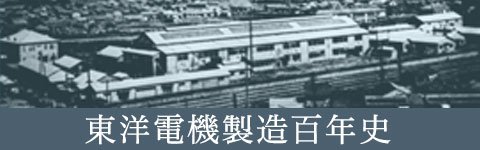
In Japanese only
(Created in 2018, which marked the 100th anniversary of our founding)